
 makezine.com
 Opening: Why Build Your Own Automatic Chicken Coop?
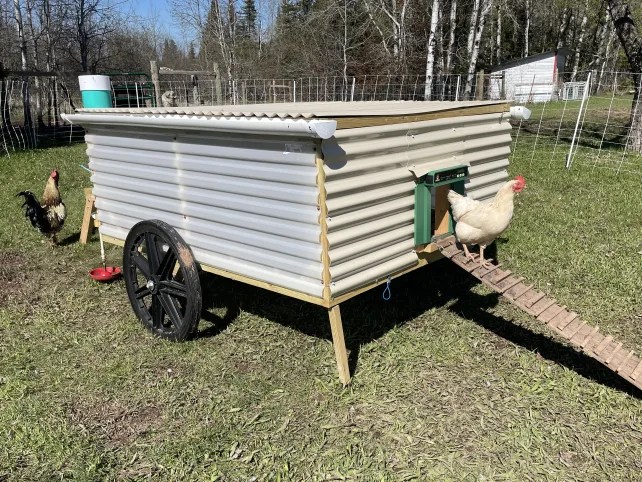
Automatic chicken coops offer convenience and peace of mind, especially if you have busy schedules or travel frequently. They automatically open and close the coop door at pre-set times, protecting your flock from predators and ensuring they get their daily dose of sunlight. While commercially available automatic coops can be pricey, building your own DIY version is a rewarding project that saves money and allows for customization. This guide will walk you through the process, step by step.
Step 1: Planning and Design
Before you start cutting wood, careful planning is crucial. Consider these factors:
- Coop Size: Determine the size of your coop based on the number of chickens you have. Overcrowding can lead to stress and health problems. A general rule of thumb is 4 square feet per bird inside the coop and 10 square feet per bird in the run.
- Door Mechanism: Choose the type of door mechanism you want to use. Common options include:
- Linear Actuator: Powerful and reliable, but can be more expensive.
- Winch System: Utilizes a motor and winch to raise and lower the door, offering good lifting capacity.
- Servo Motor: Budget-friendly but may require more complex programming.
- Power Source: Decide how you'll power the automatic door system. Options include:
- AC Power: Simple if you have an outlet nearby, but vulnerable to power outages.
- Battery Power: Provides backup during power outages, but requires regular charging or replacement.
- Solar Power: Sustainable option that reduces reliance on the grid. Requires a solar panel, charge controller, and battery.
- Controller: Select a controller that will manage the opening and closing times. Options include:
- Timer: Simple and inexpensive, but less flexible.
- Light Sensor: Opens and closes the door based on sunrise and sunset, automatically adjusting for seasonal changes.
- Microcontroller (Arduino, Raspberry Pi): Offers the most customization and control, but requires programming knowledge.
Step 2: Materials and Tools
Gather the necessary materials and tools based on your chosen design. Here's a general list:
- Wood for the door and any necessary modifications to the coop (pressure-treated lumber is recommended for outdoor use)
- Door (pre-made or DIY)
- Selected door mechanism (linear actuator, winch, or servo motor)
- Power source (AC adapter, battery, solar panel, charge controller)
- Controller (timer, light sensor, or microcontroller)
- Wiring, connectors, and electrical tape
- Screws, nails, and other fasteners
- Tools: Saw, drill, screwdriver, measuring tape, wire stripper, multimeter (optional)
Step 3: Building the Door Mechanism
This step will vary depending on the chosen door mechanism. Here's a general overview:
- Linear Actuator: Mount the linear actuator to the coop frame and the door, ensuring it can extend and retract smoothly. Connect the wiring to the power source and controller.
- Winch System: Mount the winch motor to the coop frame. Attach a cable or rope to the winch and the door. Ensure the cable runs smoothly through a pulley system if needed. Connect the wiring to the power source and controller.
- Servo Motor: Mount the servo motor to the coop frame. Attach a lever arm to the servo motor and connect it to the door with a linkage. Connect the wiring to the power source and controller.
Step 4: Wiring and Electrical Connections
Connect the door mechanism, power source, and controller according to the manufacturer's instructions.
- AC Power: Use appropriate electrical connectors and ensure the wiring is properly insulated. Consider using a GFCI outlet for added safety.
- Battery Power: Connect the battery to the controller and door mechanism using appropriate connectors. Ensure the battery is properly secured.
- Solar Power: Connect the solar panel to the charge controller, then connect the charge controller to the battery and the rest of the system.
Step 5: Programming and Testing
Program the controller to open and close the door at the desired times.
- Timer: Set the timer to the desired open and close times.
- Light Sensor: Adjust the sensitivity of the light sensor to ensure the door opens and closes at the appropriate light levels.
- Microcontroller: Write code to control the door based on time, light levels, or other desired parameters. This typically involves using the Arduino IDE or a similar programming environment.
Step 6: Securing and Protecting the System
Protect the components from the elements and potential damage.
- Enclose the controller and power source in a weatherproof box.
- Protect the wiring from damage by running it through conduit or securing it to the coop frame.
- Inspect the system regularly for signs of wear and tear.
Conclusion: Enjoy the Benefits of Your DIY Automatic Coop
Building your own automatic chicken coop is a rewarding project that can save you time and effort. With a little planning and effort, you can create a reliable system that protects your flock and gives you peace of mind. Remember to prioritize safety and use high-quality materials for a long-lasting and trouble-free operation.
Automatic Chicken Coop Door, Automatic Chicken Door With Timer & Light Sensor And Remote Control
 www.nellisauction.com
 Automatic Chicken Coop
makezine.com Automatic Chicken Coop Door Review
 www.reformationacres.com


0 komentar:
Posting Komentar